How Governments Can Secure Land and Property Records Using Immutable Ledgers
Insights
May 14, 2026
Land and property records need strong protection. Errors, fraud, and manual changes can create disputes and delays. You need systems that keep records safe, clear, and easy to verify. Traditional systems rely on manual updates and scattered data, which increases the risk of mistakes. This slows down approvals and creates confusion for officials and citizens.
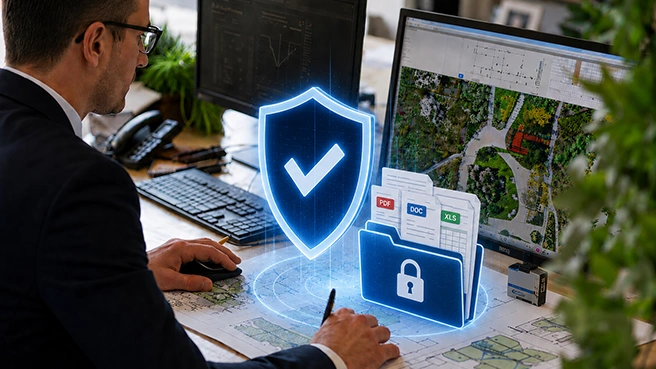
Blockchain solutions for Land Records solve these issues. It creates Immutable Property Records that you cannot change without proof. This gives governments better control and builds public trust in record systems while ensuring long-term data security and accuracy. In this article, we explain how immutable ledgers help secure land records.
Top 10 Ways Governments Can Secure Land and Property Records Using Immutable Ledgers
Governments need reliable systems to manage land records. Traditional methods often lead to data gaps and slow verification. Immutable ledgers provide a clear and secure way to store and track records.
Below are 10 practical ways to secure land and property records using this approach.
1. Create Tamper-Proof Records
Records must remain unchanged without a trace. Paper files and basic digital systems allow edits without full tracking. This creates risk in ownership disputes.
- Store records on an immutable ledger
- Lock entries after verification
- Track every update with timestamps
This ensures no one can alter records without leaving proof. You always have a clear history of changes. Secure property records help you maintain trust and reduce fraud cases.
2. Maintain a Clear Ownership History
Ownership disputes often arise from missing records. You need a full chain of ownership for every property. This should be easy to access and verify.
- Record every transfer on the ledger
- Link past and current owners
- Keep timestamps for each change
This gives you a complete ownership trail. You can verify claims quickly. Blockchain for Land Records helps you reduce legal conflicts and delays.
3. Enable Fast Verification
Verification takes time in manual systems. You need a faster way to confirm ownership and documents. Delays can slow down transactions and approvals.
- Provide instant access to records
- Use secure digital verification
- Allow authorized users to check data
This improves service speed for citizens. It reduces waiting time and errors. Secure property records make verification simple and reliable.
4. Reduce Fraud and Forgery
Fraud is a common issue in land records. Fake documents and duplicate entries can cause major problems. You need strong protection against such risks.
- Prevent duplicate entries on the ledger
- Use cryptographic validation
- Track all changes with audit logs
This makes fraud harder to carry out. You detect issues early. Blockchain for Land Records adds a strong layer of security to your system.
5. Improve Data Transparency
Lack of transparency leads to mistrust. You need systems where records are clear and visible to the right people. This improves accountability.
- Allow controlled access to records
- Share verified data with stakeholders
- Keep records consistent across all systems
This builds confidence among users. You reduce disputes and confusion. Secure property records ensure data stays accurate and visible.
6. Support Secure Digital Transfers
Property transfers often involve many steps. You need a system that records each step clearly. This reduces errors and delays.
- Record transfer details in real time
- Validate transactions before approval
- Store signed agreements securely
This keeps transfers smooth and traceable. You avoid missing data during ownership changes. Blockchain for Land Records supports secure and clear transactions.
7. Strengthen Audit and Compliance
Audits require complete and accurate data. Missing or changed records create problems. You need a system that supports easy audits.
- Maintain full audit trails
- Store time-stamped records
- Provide access for compliance checks
This makes audits faster and more reliable. It reduces manual work during reviews. Secure property records help you stay compliant with regulations.
8. Protect Records from Data Loss
Data loss can happen due to system failure or poor storage. You need a system that keeps records safe over time.
- Use distributed storage systems
- Backup records across multiple nodes
- Protect data from single-point failure
This ensures records remain available even during issues. You avoid permanent data loss. Blockchain for Land Records improves long-term data safety.
9. Simplify Record Management
Managing large volumes of records can be complex. You need a system that keeps data organized and easy to handle.
- Store records in a structured format
- Enable quick search and retrieval
- Reduce manual record handling of records.
This improves efficiency for government teams. You save time and reduce errors. Secure property records make record management simpler.
10. Build Public Trust
Trust is key in land and property systems. People need confidence that records are correct and secure. You must provide clear and reliable systems.
- Offer transparent access to records
- Ensure data accuracy at all times
- Provide clear verification processes
This builds trust among citizens and stakeholders. You reduce disputes and complaints. Blockchain for Land Records supports a fair and reliable system. ULEDGER helps governments implement these systems in a structured way.
Conclusion
Securing land records requires clear systems and strong control. You need records that stay accurate, traceable, and easy to verify. Immutable ledgers help you achieve this with better transparency and security.
Blockchain for Land Records supports long-term data protection. It reduces fraud, improves verification, and simplifies management.ULEDGER helps you build secure property records that remain secure and reliable over time.
Blog Post By
Blog Post By
Join Newsletter
Join Newsletter
Get the latest updates delivered into your inbox monthly. No spam.
Oops! Something went wrong while submitting the form.
GET STARTED
Start Organizing Your Digital Assets
FAQ's
Frequently Asked Questions
What Are Quantum Safe Security Solutions?
Quantum-safe security solutions use cryptography designed to resist attacks from future quantum computers. They protect sensitive data even if current encryption standards become vulnerable.
How Does Blockchain Ensure Data Integrity in Enterprise Systems?
Blockchain creates immutable, time-stamped records that cannot be altered without detection. This makes it easier to prove what happened and when.
What Is a Quantum Safe Blockchain?
A quantum-safe blockchain combines distributed ledger architecture with quantum-resistant cryptography. It keeps records tamper-evident while preparing for future threats.
Post Quantum Cryptography vs Traditional Encryption: What’s the Difference?
Traditional encryption can be broken by powerful quantum computers in the future. Post quantum cryptography is designed to stay secure even in that scenario.
Why Do Enterprises Need Quantum-Resistant Cryptography Today?
Data stolen today can be decrypted later when quantum technology matures. Quantum-resistant cryptography prevents that long-term exposure.
How Can Blockchain and Post-Quantum Cryptography Work Together?
Blockchain secures and timestamps records, while post-quantum cryptography protects the underlying signatures and keys. Together, they create durable, tamper-evident systems.
What Are the Risks of Quantum Computing to Current Encryption Methods?
Quantum computers could break widely used public-key encryption algorithms. That would expose stored data, digital signatures, and authentication systems.
How Do Quantum Safe Blockchain Solutions Protect AI Systems and Data Provenance?
They anchor AI inputs and outputs with cryptographic proofs that cannot be altered later. This supports traceability, auditability, and trust in automated decisions.
What is Cross-Merkleization?
Cross-Merkleization is ULedger's proprietary protocol for cryptographically anchoring state between independent blockchain instances. When a block finalizes on one chain, its PLONK-proven header is embedded into every other connected chain. This creates trustless, verifiable state binding across chains — no bridge contracts, no relay operators, no trusted intermediaries required.
Do I need to hold cryptocurrency or pay gas fees to use ULedger?
No. ULedger operates on a flat licensing model. There are no gas fees, no required token holdings, and no exposure to crypto market volatility. Pricing is predictable and designed for enterprise procurement cycles.